6.5.1 Allergen Identification, Handling, Storage, and Clean Up
The GWSI Allergen Identification, Handling, Storage, and Spill Clean-up Policy aims to minimize the risk of allergen cross-contact and ensure the safety of all food products handled and stored in GWSI facilities. This policy is intended to protect consumers with food allergies, enhance overall food safety practices within the facility, and protect employees with allergen sensitivities in the event of exposure.
Objectives
- Identify all allergens present in the facility
- Implement effective procedures for handling, storage, clean up, and disposal
- Train staff on allergen awareness and control measures
- Reporting procedures to the commodity owner in the event of a spill or cross-contact
Identification
- There are nine food allergens designated by the USDA, referred to as the “Big 9”, that are the leading causes of food allergies in the United States: milk, eggs, fish, crustacean shellfish, tree nuts, peanuts, wheat, soy, and sesame.
- These nine allergens may be received and stored at GWSI packaged by themselves or as ingredients within other food commodities.
- Any commodity received at GWSI that contains an allergen listed as one of the “Big 9” will be identified in the flex field Allergen for each line item on the receipt, which will be reflected on the inbound and outbound paperwork as “Allergen:[Big 9 Allergen(s)]“.
- The “Allergen:[Big 9 Allergen(s)]” notation on the paperwork will notify the operator that they will be handling an allergen and must adhere to the Allergen Handling and Storage process.
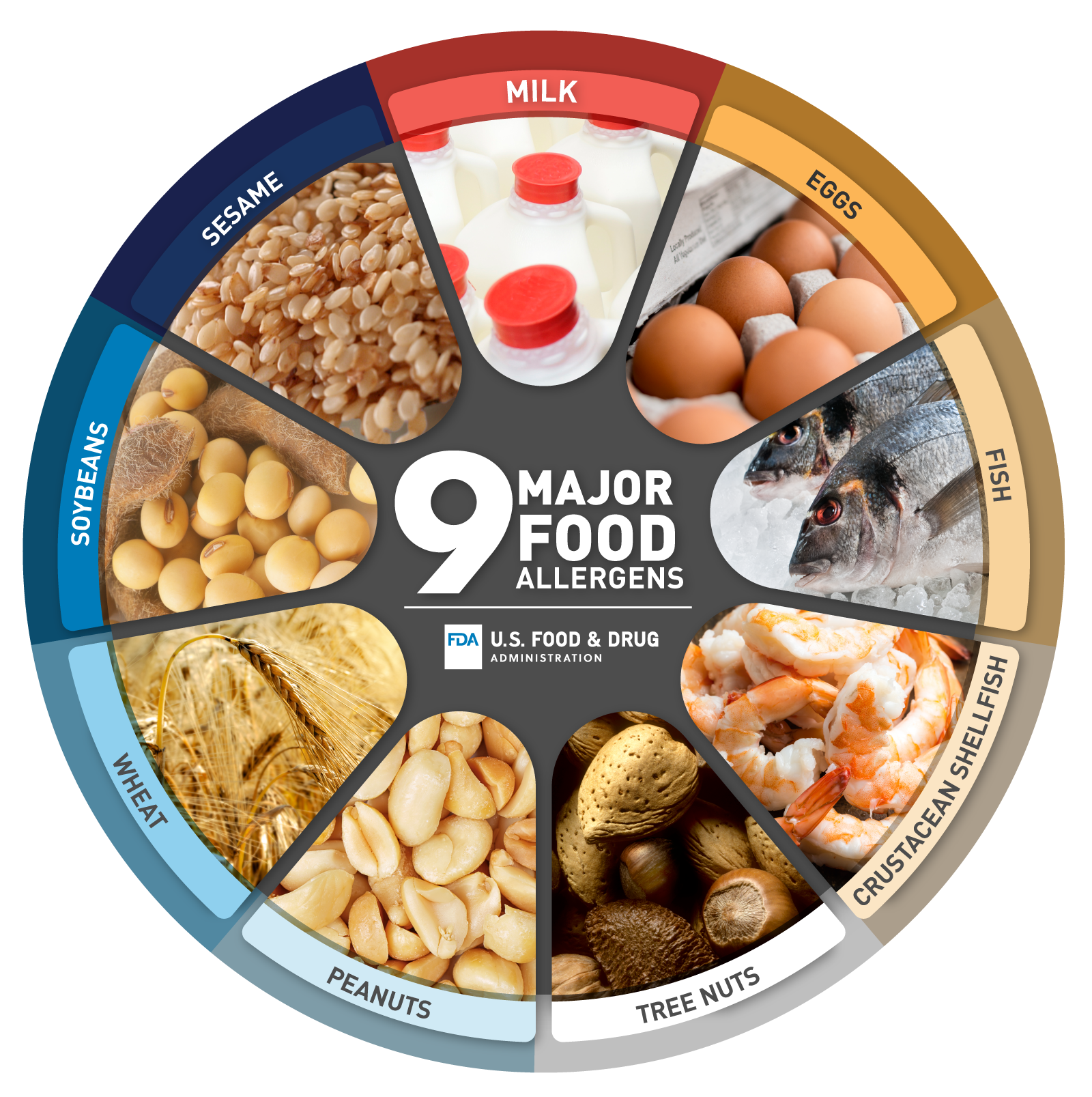
Allergen Handling and Storage
Receiving
- Office staff will generate the receipt paperwork and moveable unit labels (if necessary), double-check to confirm that all commodities containing allergens are correctly identified on the receipt paperwork with the “Allergen:[Big 9 Allergen(s)]” notation, and hand it to the operator.
- The operator will review the paperwork, ensuring they identify the SKU and the number of moveable units that contain an allergen, and the allergen.
- Following the GWSI Receiving Cargo Process, the operator will unload, label, and locate the movable units. During this process, the operator will double-check that all moveable units containing an allergen are free of leaks, punctures, or direct exposure to the allergen and that the unit is thoroughly wrapped and stabilized for storage.
Storage
- All food commodities must be stored in the designated food-grade storage warehouse or its designated section.
- GWSI strictly prohibits the commingling of allergen-containing commodities in contact with other allergens or non-allergen-containing commodities unless otherwise approved and requested by the commodity owner or the operator is rendered incapable of avoiding doing so by the manufacturer’s product packaging. Allergen-containing commodities not approved for commingling cannot be stacked on top of, underneath, or up against, and touching, commodities containing different allergens or non-allergen-containing commodities.
- All movable unit locations must be updated correctly in the system via an RF scan gun.
- When the unloading and location updates are complete, the operator returns the paperwork to the office. The office staff then verifies that the updated warehouse locations are correct.
Storage Procedure
- Office staff will generate the pick ticket for the outbound release and check to confirm that all commodities containing allergens are properly identified on the pick ticket with the “Allergen:[Big 9 Allergen(s)]” notation and hand it to the operator.
- The operator will review the paperwork, ensuring they identify the SKU, the number of moveable units containing the allergen, and the allergen.
- Before loading any moveable unit marked as containing an allergen, the operator will double-check it to confirm it is free of leaks, punctures, or direct exposure to the allergen and that it is thoroughly wrapped and stabilized for shipping.
- While loading the freight, the operator will not combine allergen-containing moveable units with other allergen-containing or non-allergen-containing moveable units unless requested by the commodity owner or rendered incapable of avoiding doing so by the manufacturer’s product packaging.
Spill Clean Up, Segregation, and Disposal
If a commodity containing an allergen is damaged in a way that exposes or spills the allergen, the operator working with the product must immediately stop work, notify their supervisor, segregate the damaged freight, and clean up any spills, in accordance with the procedure below.
- The operator must be aware if they have an allergic reaction to the specific allergen that has been spilled. If they do, they must notify the supervisor so another employee can be assigned to the segregation and cleanup process.
- The assigned employee must first stop any leakage to the best of their ability to mitigate the spread of allergens in the facility.
- Photographs from multiple angles showing the extent of the damage and the leak should be taken and submitted to the office, along with a record of the SKU, the movable unit, and the count of units damaged and leaking.
- The damaged unit must be physically moved to the designated triage area in the warehouse, and the moveable unit(s) will be relocated in the system to the damaged (DMG) location.
- Any other freight that comes into contact with the spilled allergen must be physically moved to the same triage area of the warehouse, located in the DMG location in the system, and photographed. These photographs will also be turned into the office, along with a record of the cargo owner, SKU, and movable units affected by the allergen spill.
- The area of the floor, columns, and any other component of the physical structure of the GWSI facility and equipment where the spill occurred, as well as the pathway to the triage area, must then be thoroughly cleaned using only solutions and cleaning utensils on the approved GWSI solutions and cleaning utensils list until all traces of the allergen are removed. A supervisor will review and confirm that the cleanup has been satisfactorily completed.
- The office staff will send a description of how the freight was damaged, the pictures taken, and a record of the SKU and quantity of damaged units to the commodity owner for disposition on remediation or disposal. The directions for remediation and disposal provided by the commodity owner will be carried out by GWSI staff under a supervisor’s review. The same procedure will be followed for any other freight owned by other GWSI customers impacted by the allergen exposure.